

Gold is expensive for a reason. Actually, for several reasons. Its shine, its flexibility, its rarity, and above all, its immortality. Gold doesn’t rust. It doesn’t lose its charm with age. If anything, time only makes it more valuable.
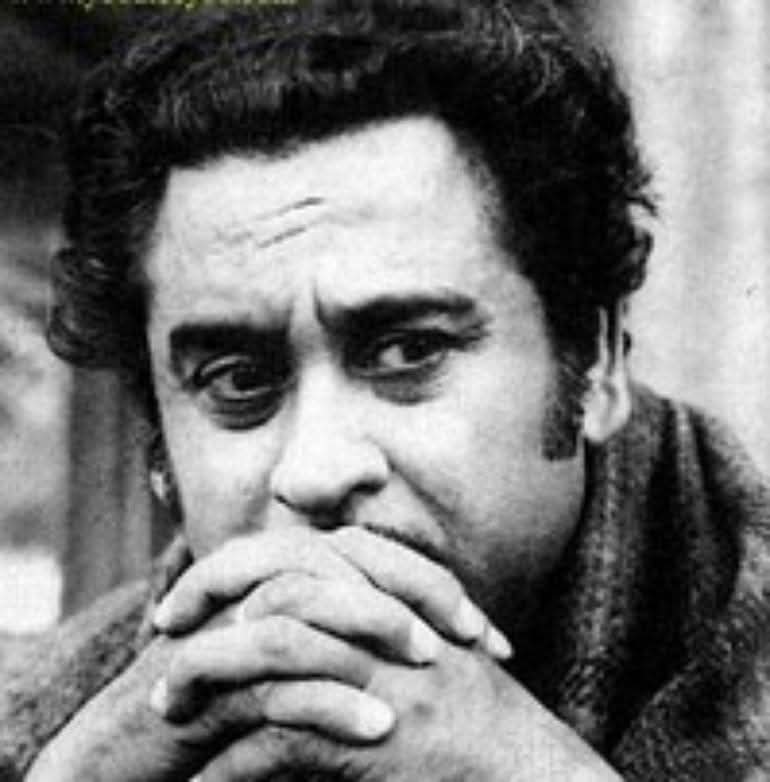
Hindi cinema has been blessed with many extraordinary playback singers. Talat Mahmood, Manna Dey, Mukesh and Hemant Kumar were all giants in their own right. But if there were ever voices that deserved to be compared with gold—or perhaps even platinum—they would be Lata Mangeshkar, Kishore Kumar, Mohammed Rafi and Asha Bhosle. Their voices had everything: brilliance, versatility, warmth and the rare ability to outlive generations. Today happens to be Kishore Kumar’s birthday, so let’s talk about him.
It has been thirty-eight years since Kishore Kumar left us. Thirty-eight years. Think about that for a moment. The generation that discovered him in its youth, sang his songs in college canteens, fell in love with them, and drowned heartbreaks with one peg after another while Kishore played in the background… that generation is slowly disappearing. Today’s multiplex audience belongs to a generation that thinks even Dilwale Dulhania Le Jayenge, Hum Saath Saath Hain or Om Shanti Om are “old movies”. My own daughter belongs to that generation. And yet, somehow, the number of Kishore fans hasn’t reduced.
Even today, hundreds of singers make a living simply by sounding like Kishore Kumar. Some imitate his voice, some his style, while others build entire careers singing nothing but his songs. Programmes titled Ek Shaam Kishore Ke Naam still pull crowds. At weddings, orchestra nights, family gatherings and Antakshari games, nearly half the songs people sing are still Kishore’s. From Kumar Sanu to countless singers on YouTube and Facebook hoping to become the next Kishore, duplicates continue to appear, even thirty-eight years after the original left us.
Tell me honestly—how many things from 1987 still bring us genuine happiness today? Kishore Kumar passed away in 1987. Many people reading this article were either not born then or were too young to remember him. Yet they love him as deeply as those who grew up listening to him. That isn’t nostalgia. That’s magic.
When Kishore passed away, I wasn’t old enough to understand what truly made his singing extraordinary. The emotions, the pain, the effortless expression hidden behind every note—those things reveal themselves only as you grow older. During my childhood, Kishore wasn’t really Kishore. He was Amitabh Bachchan’s voice. Amitabh fought on screen, danced on screen, and somehow it felt as though he sang on screen too. That’s how perfectly Kishore became the actor he was singing for.
At home, my parents were devoted admirers of Lata Mangeshkar, so for years playback singing simply meant Lata to me. As for Kishore Kumar, I knew him as the funny actor from Half Ticket, Padosan and Chalti Ka Naam Gaadi, and as Ashok Kumar’s younger brother. That was all. The mountain called Kishore Kumar lay hidden behind that tiny island called “Amitabh’s singing voice”. I discovered that mountain only years after Kishore had gone. Perhaps I simply wasn’t old enough before that. But once I truly discovered him, he stayed with me forever.
Kishore Kumar’s awards, his eccentricities, the fascinating stories about his life—you can find gigabytes of information on all that with a simple Google search. There’s little point in repeating what has already been written a thousand times. I’d rather answer a far simpler question: why do people like us continue to love Kishore Kumar so deeply?
Part of the answer, I suppose, lies in timing. For many of us, Kishore’s voice became inseparable from Amitabh Bachchan during our most impressionable years. That association got permanently etched into our minds. But there’s another reason that is harder to explain. Kishore sounded unmistakably masculine. When he sang, it felt like a man speaking his heart without trying to impress anyone. Love, mischief, heartbreak, loneliness, confidence, vulnerability—every emotion came through naturally. Perhaps that’s why his voice feels so relatable. We don’t merely listen to Kishore; somewhere along the way, we begin feeling as if we’re singing with him. His voice doesn’t sound like somebody else’s. It sounds like our own.
Even today, walk into a restaurant where a live singer is performing or attend a karaoke night, and chances are that nine out of ten men will instinctively pick a Kishore Kumar song. There’s a reason for that. Kishore made singing look possible. Achievable. He gave ordinary people the confidence to believe, “Maybe I can sing this too.” His repertoire was astonishingly vast. Whatever mood you’re in, there’s a Kishore song waiting for you somewhere. Listen to him sing for Rajesh Khanna, Amitabh Bachchan or Dev Anand, and you’ll almost feel he changes his personality to suit each actor. The same thing happens with music directors. His voice somehow feels different with S.D. Burman, different again with Kalyanji-Anandji, and different with R.D. Burman. Maybe it’s just my bias as an R.D. fan, but I have always felt that Pancham Da brought out something extra in Kishore. As though he sang with just that little bit more abandon, that little bit more soul.
Many singers arrived after Kishore Kumar. Many faded away too. Some are remembered because of a handful of memorable songs. Many have already disappeared from public memory altogether. But Kishore’s voice continues to defy time, changing generations, changing tastes and changing technology. That’s the difference between popularity and permanence. Kishore belongs to the second category.
People often ask me why I love both Lata Mangeshkar and Kishore Kumar so much. My answer has always been very simple. During life’s happy moments, their songs become the soundtrack of our celebrations. But it’s during our darkest moments that we truly discover what they mean to us.
Imagine shutting yourself inside your room after one of those days when life has completely exhausted you. You switch off the world, put on a Lata Mangeshkar song, close your eyes and listen. Within minutes, it feels as though you’ve curled up in your mother’s lap while she gently strokes your hair and sings you a lullaby. The weight on your chest slowly melts away.
Now play a Kishore Kumar song instead.
He doesn’t comfort you like a mother.
He walks in like that crazy childhood friend you haven’t met in years. He pats your back. Messes up your hair. Pulls your cheeks. Lands a playful punch on your stomach. Wraps you in a tight hug and says, “Why are you crying, you fool? Get up. Get back to work. Fight.” And before you even realise it, he’s gone—back into the radio, the cassette player, or today’s Bluetooth speaker—waiting quietly until the next time you need him.
Today marks the 97th birth anniversary of that wonderfully mad friend of ours. Five years from now, people will celebrate his centenary with exactly the same affection, the same madness and the same gratitude. Because voices like his don’t grow old. They become heritage.
Like pure gold.
Timeless. Familiar. Reassuring. Precious enough to preserve for generations. A voice that still comes to our rescue whenever life becomes emotionally unbearable. A voice that never really belonged only to Kishore Kumar.
It belonged to all of us.
It was… our voice.
Happy Birthday to the friend who has been singing in our voice all these years.
— © Mandar Jog